
Have you ever wondered why tomatoes, carrots, and leafy greens all seem to help protect your body in different ways? Though these colorful foods share antioxidant power, the key compounds — lycopene, lutein, and beta-carotene — work differently in the body. Knowing their distinctions could help you balance your diet more effectively.
1. What Lycopene Is
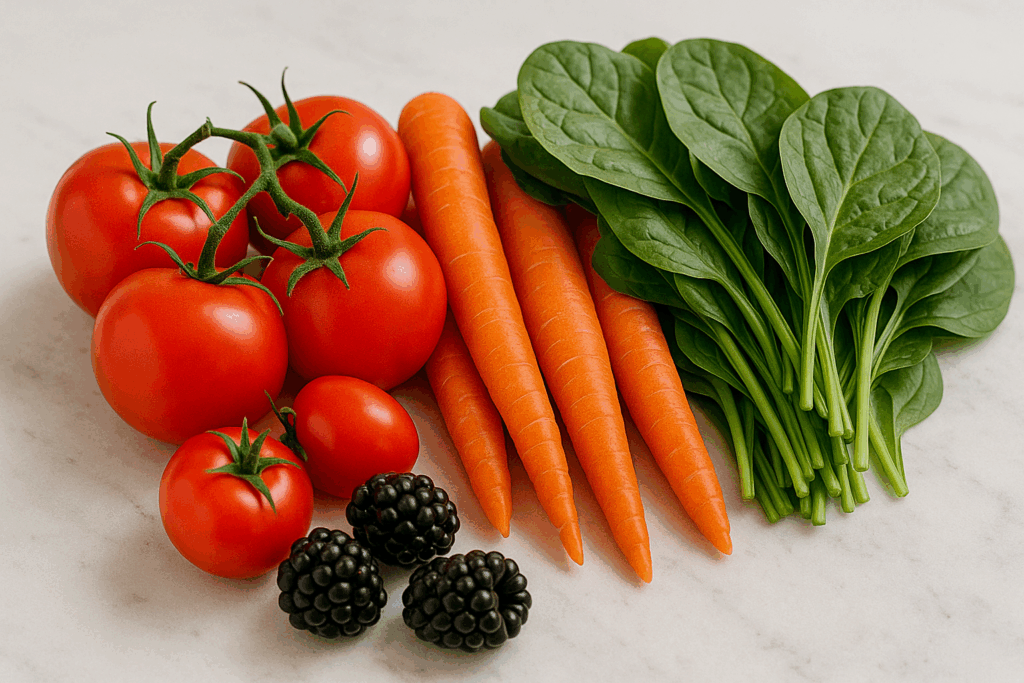
Lycopene is a red carotenoid pigment found mainly in tomatoes, watermelon, and pink grapefruit. It may help neutralize free radicals and support cardiovascular and skin health.
- Fat-soluble antioxidant that may protect cell membranes from oxidative stress.
- Heat processing (like in tomato sauce) could increase bioavailability.
- May help reduce oxidative damage related to UV exposure or aging.
2. What Lutein Does
Lutein is a yellow pigment mainly found in leafy greens like spinach and kale. It concentrates in the retina and may help protect the eyes from light-induced stress.
- Could filter blue light and support visual clarity.
- May work synergistically with zeaxanthin to maintain macular health.
- Also supports skin elasticity by reducing oxidative reactions in tissue.
3. What Beta-Carotene Contributes
Beta-carotene is an orange pigment found in carrots, sweet potatoes, and pumpkins. It serves as a precursor to vitamin A, which supports vision, immunity, and skin renewal.
- May convert to vitamin A as needed by the body.
- Acts as a protective antioxidant in cells exposed to oxidative stress.
- Excess supplement intake could be less effective than food sources.
4. Key Differences Among the Three
While all three belong to the carotenoid family, they differ in solubility, target organs, and antioxidant behavior.
- Lycopene: strongest in neutralizing singlet oxygen, may help protect the skin and heart.
- Lutein: concentrated in the eyes and may support visual and cognitive performance.
- Beta-carotene: functions as both an antioxidant and vitamin A source, influencing vision and immunity.
In general, lycopene does not convert to vitamin A, while beta-carotene does. Lutein, meanwhile, focuses more on light protection than direct antioxidant recycling.
5. How to Combine Them for Better Balance
Each antioxidant may complement the others when consumed through varied, colorful foods.
- Tomatoes, carrots, and leafy greens together could help cover multiple oxidative pathways.
- Adding healthy fats like olive oil may improve absorption since all three are fat-soluble.
- Dietary diversity may help maintain cellular and visual protection naturally.
🌟 Conclusion
Lycopene, lutein, and beta-carotene may share a family name but serve distinct purposes. Lycopene could focus on heart and skin defense, lutein may guard the eyes, and beta-carotene might bridge toward vitamin A. Together, they form a colorful trio that supports balance from the inside out.
References and Further Reading
- National Center for Biotechnology Information — Carotenoids and Antioxidant Activity
- Harvard Health Publishing — Lycopene and Heart Health
- American Optometric Association — Lutein and Eye Protection
Disclaimer
This article is for informational purposes only and not medical advice. Nutrient absorption and effects may vary depending on diet and health condition.