Berries are often called superfoods because of their nutrient density and health-supporting properties. Among them, blueberries and blackberries are two popular choices that may look similar but have distinct differences. From flavor to nutrition and culinary use, each berry offers unique benefits. This article compares blueberries and blackberries so readers can better understand which might suit their diet and lifestyle.
1. Appearance and General Features
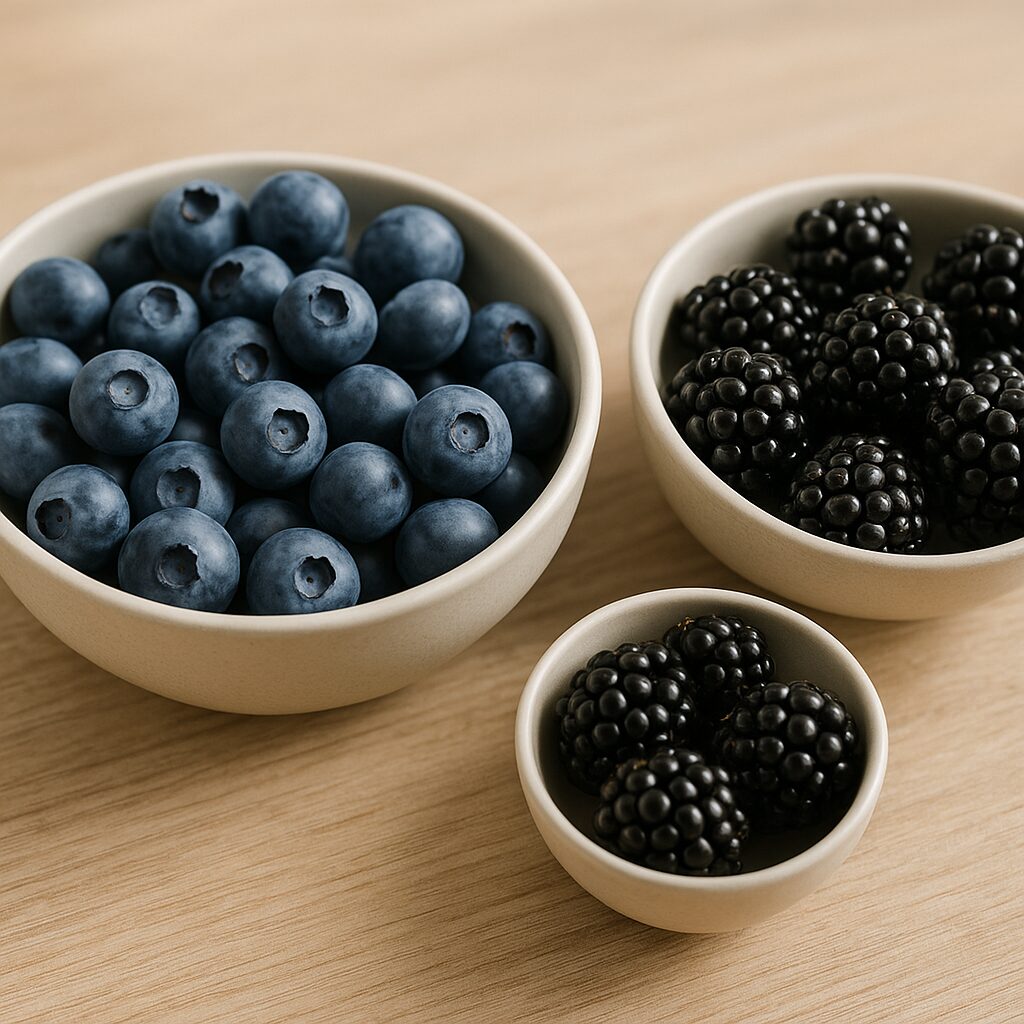
Blueberries are small, round, and blue-purple in color with a protective white bloom that helps keep them fresh. They are typically smooth and firm in texture. Blackberries, on the other hand, are larger, darker, and composed of small drupelets, giving them a bumpy appearance. They often feel juicier and have noticeable seeds.
2. Nutritional Profile
Blueberries are rich in anthocyanins, which may support eye health and circulation. They also contain vitamin C, vitamin K, and manganese. Blackberries are higher in dietary fiber and vitamin C, and they provide vitamin A and calcium. Both berries are high in antioxidants, though blackberries generally deliver more fiber, while blueberries are often praised for their antioxidant potency.
3. Taste and Texture
Blueberries usually have a sweet and mildly tart flavor, making them enjoyable for both children and adults. Blackberries tend to be less sweet and more tangy, with a stronger flavor profile. Their seeds add crunch, which some may find pleasant and others less appealing, but they contribute additional fiber.
4. Culinary Uses
Blueberries are versatile and often eaten fresh, added to yogurt, smoothies, baked goods, or salads. They retain their pleasant taste even when frozen. Blackberries are commonly used in jams, sauces, and pies because their tartness balances sweetness well. They can also pair nicely with savory dishes, such as meat sauces or dressings.
5. Storage and Freshness
Blueberries are delicate and should be stored in the refrigerator unwashed until ready to eat. Washing them too early may cause them to spoil faster. Blackberries are similarly perishable and are best consumed within a few days of purchase. Both can be frozen to extend shelf life and are often used in smoothies or desserts after thawing.
6. Choosing the Right Berry
Blueberries may suit those who prefer sweeter flavors and easy snacking, while blackberries may appeal to those looking for more fiber and a tangy kick. For the best balance of nutrients and flavor, including both in the diet could be an ideal option.
🌿
Blueberries and blackberries may look alike, but they each bring different benefits to the table. Blueberries are sweet, antioxidant-rich, and versatile, while blackberries are fiber-packed, tangy, and excellent for cooking. Combining both may offer variety in taste and nutrition, supporting a well-rounded and enjoyable diet.
References and Further Reading
World Health Organization (WHO) – Fruits and Health
National Institutes of Health (NIH) – Berries and Nutrition
Harvard T.H. Chan School of Public Health – Antioxidant Benefits of Berries
※ This article is for general informational purposes only. Individual responses may vary, and balanced dietary practices are recommended.